confabulations

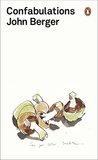
Confabulations

Confabulations by John Berger

✨ my rating: 3 of 5 stars

Berger writes very lyrical and poignant prose, to the point that even when I don’t exactly agree or his arguments are unsubstantiated, I find myself being swept along by the lovely quality of his words. However, while some of the stories were hits, others are misses, leading to nowhere. Even so, I enjoyed the book – he’s very thoughtful and a great storyteller.


🌹date read: 16 may 2019 🌹

view all my goodreads reviews

looking at pictures

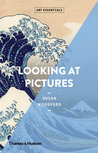
Looking at Pictures

Looking at Pictures by Susan Woodford

✨ my rating: 2 of 5 stars

It raised some good points but it’s a bit… forgettable. I wished it went more into the technical aspects instead of being so example-based.


🌹date read: 11 may 2019 🌹

view all my goodreads reviews

the art book: big ideas simply explained

The Art Book: Big Ideas Simply Explained by Caroline Bugler

✨ my rating: 1 of 5 stars

I was eager to read this because of my interest in art history, and its seemingly lively style of presenting information. Indeed, if you’re looking for something along the lines of “fun facts about art”, this would cut it – it’s educational and simple enough to read due to its infographic-style layout, illustrations and explanations.

However, for someone who wants a clear and concise understanding of art, the information presented here is simply too messy and disjointed. It was organised chronologically, but instead of giving a comprehensive overview of the characteristics of the different art movements, it offered snippets and analyses of specific artworks. Consequently, I felt that some things were not covered in-depth or sufficiently placed in context. I’ll continue my hunt for a good art history book; until then, I unfortunately wouldn’t recommend this.

🌹 date finished: 10 jan 2019 🌹

view all my goodreads reviews

ways of seeing

✨ my rating: 3 of 5 stars

John Berger is a well-known name in the realm of art criticism, so I was really looking forward to watching this four-part documentary series, in anticipation of reading his book of the same name.

The episodes offered very insightful views on art, starting off with how we perceive art in the modern world. The context in which we now consume fine art is vastly different from how it used to be appreciated, rendered in pixellated forms and proliferated through photographic reproductions. It has been democratised and made accessible, and along with that, how we respond to it has changed as well – a point that made me consider how I myself receive and view art now. Berger also discusses the portrayal of beauty, particularly of women, in art, which I found to be very pertinent and still relatable to today’s society. The other episodes go on to talk about art in the modern consumerist world, and hw its value has changed over time.

I appreciated how Berger engages the viewer by establishing that his views are subjective, and one is open to disagreeing. I personally didn’t align with his views concerning the meaning of objects in pictures, whereby he focused mainly on their material significance rather than symbolic value. He also leaves room for contemplation and consideration of his opinions; however, this had the downside of being slightly slow-moving at times.

All in all, this was a good watch, and really interesting because of its intellectual insights that were made easy to understand, and not layered with academic jargon.

Ways of Seeing; directed by Michael Dibb

🌹date watched: 9 jan 2019 🌹

the thing the book

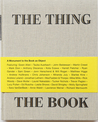
The Thing The Book: A Monument to the Book as Object

The Thing The Book: A Monument to the Book as Object by John Herschend

my rating: 4 of 5 stars

I think one either hates this book, or loves it. I personally loved it. 😀

There were parts that really confused me, no question about that, and some stuff which just left me thinking, “WHATis going on?” The point of the book is to explore the conventional elements of the book as an object, and to pick apart those different elements through spinning experimental twists on them. Unlike what we’d expect from a book (as a linear progression of text), you never know what to expect on the next page of this one. Some articles were slightly mundane or flew over my head, others left me trying to stifle my laughs in the library, and one or two encapsulated exactly how I feel about the beauty and importance of books in a digital age.

Yes, it can be pretentious, but it was also profound. They achieved their objective in making the book to be a sort of conceptual artwork, with different components going on at the same time to represent, perhaps, the active faculties of our brain when imagining and trying to comprehend a text – for instance, the quirky stop-motion flip drawings at the top of the pages! I enjoyed this a lot, and I think it’s definitely worth a read!

🌹 date finished: 9 jan 2019 🌹

view all my goodreads reviews

loving vincent

loving_vincent✨ my rating: 4 of 5 stars

I admire Vincent van Gogh’s art immensely, and so was instantly drawn to watch the film when I saw it screening at The Projector! The film was engaging; structured as a dramatic mystery in which Armand Roulin, the son of van Gogh’s close friend, the postman Joseph Roulin, seeks to discover the truth of truth behind van Gogh’s death.

Visually, it was stunning – “every frame of this film… was hand-painted over in oil paint in the style of van Gogh” – and the cinematography was gorgeous. The textures of the oil paint made the film really come alive, and some scenes were really dazzling. The character of Vincent himself was also played very well by Robert Gulaczyk, from his shy awkwardness to his struggles with mental health. It was heartbreaking to see how he was shunned and treated with cruelty by many, and for me, it hit me personally particularly because of the mental illness aspect. 

I really felt for him; van Gogh seemed gentle and able to see the beauty in life, yet was so plagued by inner demons.

While the visual and aesthetic appeal really stood out, plot-wise, it wasn’t fantastic. I felt that the motivations behind Roulin’s desire to find out what happened, and his character overall, was not adequately fleshed out. His sudden 360 from being indignant at his father’s admiration for Vincent swerves to being keen and empathetic, without sufficient explanation in my opinion, and made his quest seem less believable. Dr Gachet was also initially set up as a suspicious character with vested interests, yet Roulin really easily believes and trusts him by the end, which I felt was a really hasty and abrupt conclusion.

Overall, despite these gaps, I still really enjoyed the film. Not only was it a labour of love, taking around 7 years to make, it was also touching and it offers a poignant look into the life of the extraordinary Van Gogh. 😀

Loving Vincentdirected by Dorota Kobiela, Hugh Welchman

🌹date watched: 30 dec 2018 🌹